Five Artistes Present Powerful Chamunda Theyyam Performance
Lucknow – The second evening of Sonchiraiya’s 15th annual celebration and the fifth edition of its folk arts festival “Deshaj” unfolded with a vivid display of India’s cultural diversity, culminating in the soulful staging of Bhikhari Thakur’s iconic work “Bidesia”. Held at Lohia Park in Gomtinagar, Sunday’s event drew audiences into a richly layered world of folk rhythm, migration stories, and traditional artistry.
The evening began with the formal inauguration by RSS Prant Pracharak Kaushal and Uttar Pradesh Chief Minister Yogi Adityanath’s Advisor Awanish Awasthi. Pracharak Kaushal praised noted folk singer Padma Shri Malini Awasthi, calling her relentless efforts toward preserving India’s folk traditions the true reason behind the honour she has earned. He said her work continues to take Indian folk culture to a global audience.
Folk Colours from Across India
The performances opened with Maharashtra’s vibrant Sangi Mukhota dance, led by Chebil Das Vishnu Gauli, where artists used expressive masks to depict animals as an integral part of human life. The masks brought to life forms of Devi, Bhairav and Singh, blurring the line between the human and the divine.
This was followed by an intense and visually striking presentation of Chamunda Theyyam, performed by five artistes under the leadership of renowned Mohiniyattam exponent Jayaprabha Menon. With elaborate costumes, towering headgear, copper and brass ornaments, and traditional facial colours, the performers brought alive the fierce form of Goddess Chamunda. Theyyam’s Puttam segment was also showcased.
From Mizoram, a 16-member troupe led by Zosanglura Zote performed the Cheraw or bamboo dance, capturing the joy expressed during hill-side migration for farming and the celebration of protecting crops.
Students Bring Out the Soul of Kajri
A standout segment of the evening featured students of Bhatkhande Sanskriti Vishwavidyalaya, who performed a series of beautifully rehearsed Kajri songs. Prepared under the guidance of Padma Shri Malini Awasthi during a workshop in Chandauli, the presentation began with an invocation to Goddess Vindhyavasini. Songs like “Runjhun Khol Na Kevadiya, Hum Bideswa Jaibo Na” left the audience swaying to the gentle monsoon melodies.
Vice Chancellor Prof. Mandavi Singh attended the event and blessed the students on stage. A group of 25 students, including Swatantra, Harshit, Anoop, Aditya, Deepak, Anshika, Alka, Ekta, Akash, Simran, Divyanshi, and Neha performed in the segment.
Rajasthan, Chhattisgarh, Punjab and Gujarat Add Vibrance
Rajasthan’s celebrated Ghoomar dance, choreographed by Anjana Kumawat, painted the stage in desert hues. Beginning with “Luma Jhuma Sa Ladli”, the troupe portrayed women fetching water from village ponds. The electrifying Chari dance—performers balancing flaming brass pots on their heads—left the audience spellbound.
From Chhattisgarh, Ganga Sodi and her group performed the energetic Gond Mariya dance, where 20 artistes adorned with horn-shaped headgear celebrated the exuberance of tribal wedding festivities.

This was followed by the spirited Punjabi Giddha, presented by 15 members under Ravi Kumar. The dance depicted the joyful reunions of married women during the monsoon festival of Teeyan.
The evening concluded with Gujarat’s exuberant Dangi dance led by Suresh Pawar, featuring 15 artistes. Symbolizing the arrival of a new harvest and wedding celebrations, the performance included impressive pyramid formations.
Prominent cultural figures, including Regional Lalit Kala Akademi Secretary Devendra Tripathi and Director of Uttar Pradesh Folk and Tribal Arts Institute Atul Dwivedi, were present at the event.
Bidesia: A Heart-Wrenching Tale of Love, Separation and Return
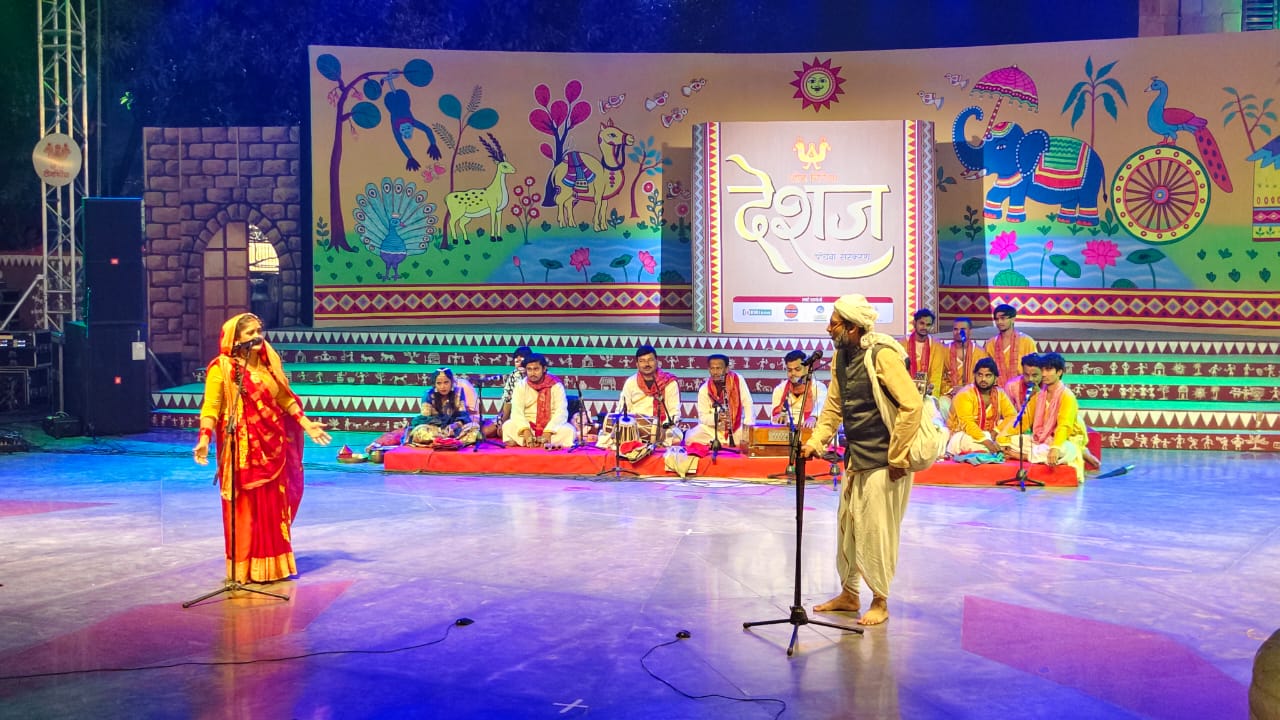
The highlight of the evening was the musical drama “Bidesia”, directed by Sanjay Upadhyay, bringing to life Bhikhari Thakur’s famed narrative of migration and longing.
The story follows a young man who leaves his village for work in Kolkata soon after marriage. There, he meets another woman who falls in love with him, leading him to settle in the city. Meanwhile, his wife in the village endures loneliness, social pressures, and the anguish of waiting.
When she finally sends a message through a traveller, Bidesia is overwhelmed and decides to return, despite resistance from his second partner. The emotional reunion ends on a hopeful note, with both women choosing to live together harmoniously.
Kumar Sparsh delivered a compelling performance as Bidesia. The cast included Aparajita Mishra, Urmila, Zafar Akbar, Rahul Ranjan, Krishna Kumar, Rupali Sinha, and others.
Live music heightened the impact of the drama: Rohit Chandra on harmonium, Rajesh Ranjan on dholak and tabla, Aneesh Mishra on sarangi, Mohammad Noor on clarinet, and Abhishek Raj on side effects.
With its mix of cultural richness, emotional storytelling, and unforgettable performances, the second evening of Desaj left audiences deeply moved and reminded them of India’s enduring folk heritage.